Fall and rise
Finnegans WakeFall and rise names one of Finnegans Wake’s governing patterns: a fall that scatters stories through time, and a revival that remains at once promised, imagined, and unresolved. Finnegan’s collapse is not simply an ending. It becomes the occasion for retelling, while the text’s recurring reversals make falling and rising inseparable phases of a communal cycle.
The fall that begins the story
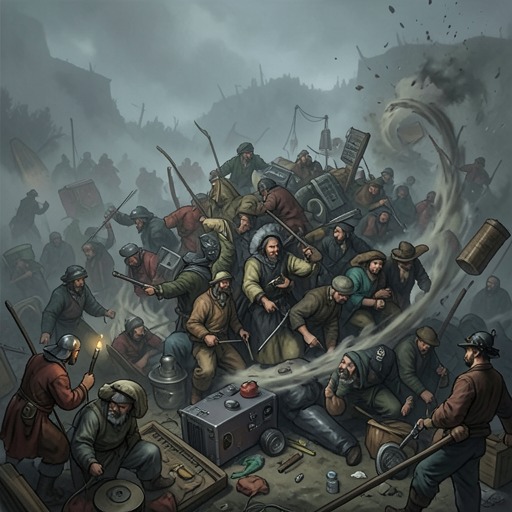
The pattern is announced as the fall of a once-straight old wall, an event retold early in bed and later in life, carried down through Christian minstrelsy. Its enormous thunderword makes collapse sound less like a private mishap than a world-shaking occurrence. The fall brings Finnegan down, and his head is sent westward in search of his toes; the body is divided into comic, toppled parts, but the story’s motion does not stop there. The search itself converts the fall into a narrative journey.
The account attaches this collapse to a place in the park where oranges have lain to rust on the green since the first love of the river. Ruin is therefore lodged in a landscape layered with time, not isolated as a single moment. The image joins bodily falling to the persistence of a world that bears traces of earlier events, so that the collapse can be remembered and retold long after it occurs.
Reversal as a rule
The text makes the return explicit in a compact paradox: if one falls, one must rise. Yet the promise is immediately qualified by the language of farce and a secular phoenix: recurrence does not restore the fallen figure in a solemn or unchanged form. Revival arrives through comic transformation, where the possibility of rising is real but never cleanly separable from another fall or another performance.
That instability is sharpened by the repeated transformation of Finnegan’s name. He is hailed first as Mister Finn, then greeted as Finnagain; the morning makes him vine, while evening turns him to vinegar. The sequence of punning changes makes return a change of state rather than a return to a fixed identity. The later joke that Mister Funn will be fined again links recurrence to punishment as well as renewal: the name comes back altered, and the old cycle carries its burdens with it.
Work, inheritance, and waking
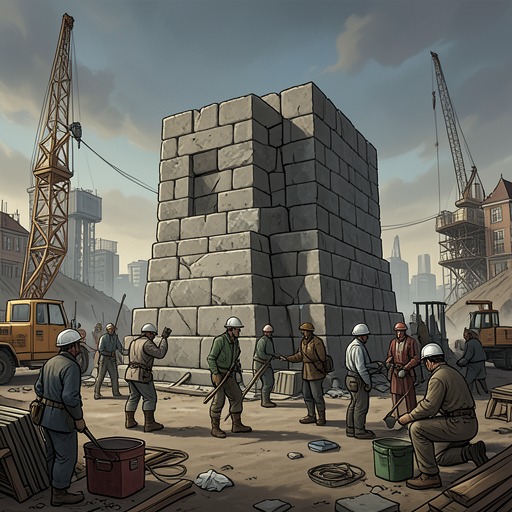
Finnegan’s labor gives the motif a material counterpart. A builder who works with hod, cement, and edifices, he piles building upon building beside the rivers. His construction rises from almost nothing into a towering skyline, with workers carrying tools and buckets up and down its heights. The upward movement of the building does not cancel the possibility of collapse; it gives the rise a visible form that remains exposed to the book’s larger pattern of ruin and return.
The community remembers him as an ancestor who dug and cultivated for himself and his dependents, worked his crew, and delivered a livelihood to those who came after him. That inheritance is neither purely heroic nor secure: the passage also associates his legacy with dread and with an alternative imagined in a widow’s house. The question of whether he will wake is made conditional—if the whispering grasses rouse him, if the fiery bird rises, or if the truth is passed from elders to younger people. Renewal depends on natural recurrence and on human retelling alike.
The sleeping hero and the monuments
The possibility of return expands beyond Finnegan’s body into the landscape. Chambered cairns at Howth, Coolock, and Enniskerry are described as silent witnesses, stones scattered across hills and valleys and preserving a record that reaches from the dead toward the living. The text imagines these stones gathered back to their herdsman and paladin when he wakes from earth-sleep at Greenman’s Rise. His revival is pictured as a public, almost legendary reappearance: crested and elevated in a briar-filled valley, he will sound a great horn across the land.
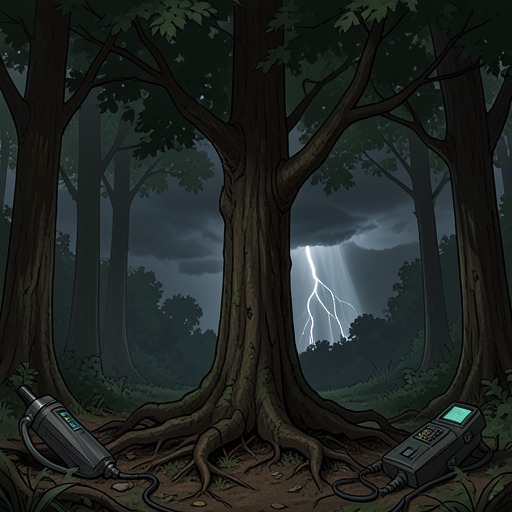
But the promise is countered by another portrait of bodily decline. Finnegan’s brains are cool, his pelt damp, his heart still, and his blood sluggish; his breath is reduced almost to nothing, and his extremities are rendered through a chain of place-name-like distortions. In this condition, words weigh no more on him than raindrops. Sleep makes him seem beyond ordinary response, even as the passage turns rain and sleep into a rhythmic sequence of drops, waiting for the time when sleepers themselves will be affected.
Recurrence without final resolution
Fall and rise is thus both a plot pattern and a principle of narration. Finnegan’s fall gives rise to stories, jokes, and inherited memories; the expectation of waking gives those accounts a future, while the imagery of earth-sleep and physical decline keeps that future uncertain. Monuments preserve the past, descendants carry it forward, and verbal transformations return the fallen man under altered names. No single restoration closes the cycle. The book’s force lies in making collapse and revival recur together, so that each apparent ending can become another beginning without erasing what has fallen.